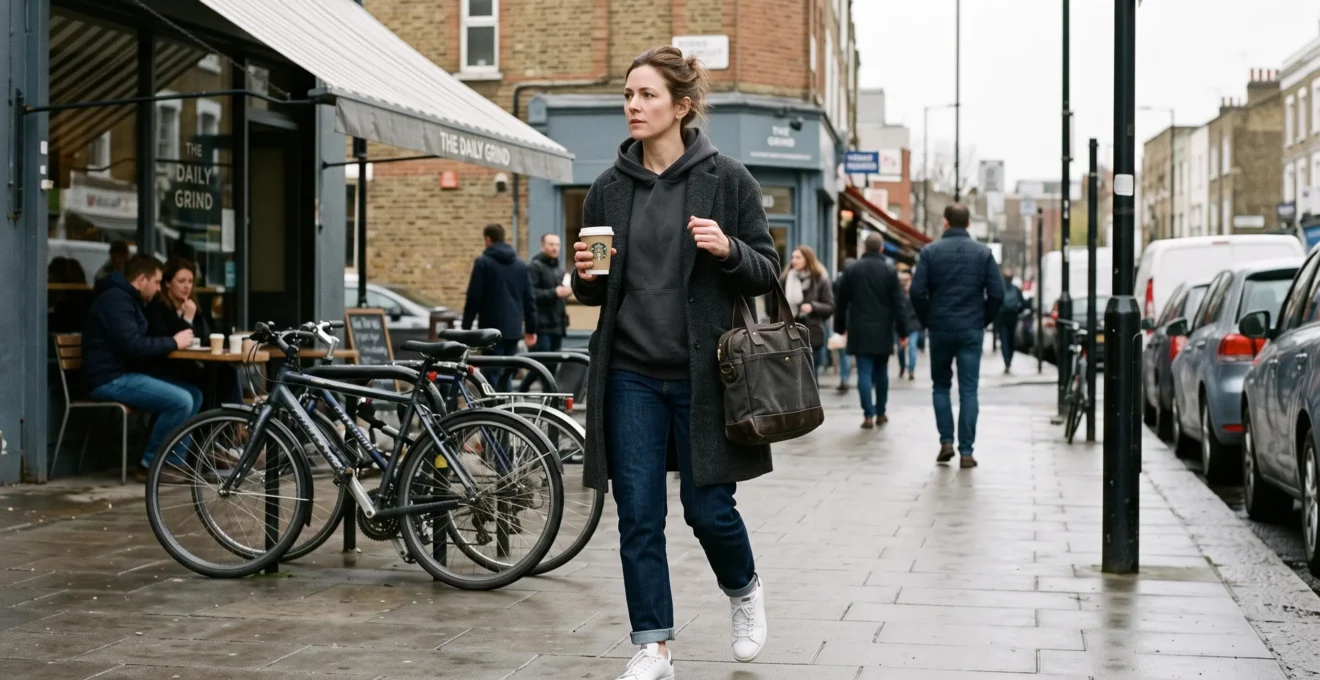
Streetwear does not come with an expiry date. An oversized hoodie, relaxed denim or a distinctive pair of trainers can look entirely natural at 35, 45 or 55. The problem begins when the outfit feels assembled to demonstrate an understanding of streetwear rather than to serve the person wearing it.
The difference rarely comes down to age or money. It comes down to proportion, familiarity and context. A hoodie that works with your usual trousers feels more convincing than an expensive matching set purchased to recreate a social-media outfit. Likewise, clean trainers can make tailoring feel contemporary without turning dinner into a fashion performance.
Adult streetwear works best when the clothing fits your actual routines, not an imaginary lifestyle. That means learning which silhouettes suit you, understanding when a casual element belongs in a smarter setting, and buying pieces you are comfortable wearing repeatedly. It also means recognising when a trend, a hyped purchase or a difficult fabric is creating more effort than value.
Adult streetwear: the essentials
- Build around clothes you already wear confidently, introducing distinctive streetwear pieces gradually.
- Balance relaxed proportions with structured elements, especially when combining streetwear and tailoring.
- Choose trainers and denim for repeat wear, practical comfort and compatible silhouettes rather than hype alone.
- Why Does Streetwear Look Effortless on Some People but Forced on Others in the Same Outfit?
- How to Add One Streetwear Piece to a Smart Outfit Without Losing Credibility at Dinner
- How Can You Break In Rugged Denim Without Pain and Without Ruining the Fit?
- The Hype-Buy Mistake That Leaves You With Trainers You Never Wear Outside One Outfit
- When Should You Stop Wearing a Streetwear Trend So You Don’t Look 2 Seasons Behind?
- How to Break In Rigid Denim in 7 Wear Sessions Without Stretching the Waist Out
- Which Shoes Work Best With Wide-Leg Trousers: Trainers, Loafers, or Heeled Boots for Daily Wear?
- How Can You Break In Rugged Denim Without Pain and Without Ruining the Fit?
Why Does Streetwear Look Effortless on Some People but Forced on Others in the Same Outfit?
Streetwear looks effortless when the clothes appear to belong to the wearer’s normal life. It looks forced when the outfit seems built around proving that a particular item is fashionable. The difference is often familiarity: confident wearers combine distinctive pieces with established favourites, while less convincing outfits rely on several unfamiliar trends competing for attention.
Consider two people wearing an identical oversized hoodie. One pairs it with trousers worn for years, comfortable trainers and a familiar jacket. The other combines it with newly purchased statement sneakers, exaggerated accessories and trousers chosen specifically to imitate a photograph.
Neither combination is automatically wrong. But the first has a practical logic. The hoodie is clothing. In the second, the hoodie risks becoming the organising principle of a costume.
This is the “worn, not worn-by” principle: the wearer should remain more noticeable than the effort invested in the outfit.
A useful test is the relationship between a garment and its surroundings. An oversized technical jacket may feel ordinary on a rainy commute but conspicuous at a conservative client meeting. The further a piece moves from your everyday environment, the more carefully its styling needs to connect with the situation.
Call this the context-to-piece ratio. It is a practical styling judgment, not a measurable fashion formula. Ask whether the item has a believable purpose where you actually spend your time.
The same logic explains why buying an entire trend-driven outfit at once can be difficult. Every element demands adjustment: the trouser width, shoe shape, jacket length and even how the clothes move together.
Introducing one unfamiliar piece into a familiar outfit makes it easier to identify what works. The “one new piece” approach is a diagnostic tool rather than a permanent restriction.
Price does not resolve these problems. An expensive jacket with awkward proportions can look less coherent than an affordable one that sits correctly on the shoulders. Prominent luxury branding can also communicate conspicuous effort when the rest of the outfit lacks balance.
Instead of judging streetwear by its label, examine how naturally it integrates with what you already own.
Once a garment feels natural in casual settings, the next challenge is making that same confidence work when the occasion calls for smarter clothing.
How to Add One Streetwear Piece to a Smart Outfit Without Losing Credibility at Dinner
The safest way to introduce streetwear into a smart dinner outfit is to replace one formal element with a polished casual alternative while preserving the outfit’s overall structure. Clean leather trainers can work with tailored trousers and a good coat; a restrained bomber can replace a conventional jacket. The goal is controlled contrast, not competing dress codes.
Think of clothing as communicating different levels of formality. Tailored wool trousers, a crisp shirt and polished leather shoes generally occupy a smarter register than graphic hoodies, distressed denim and athletic trainers.
Combining those registers can produce an attractive contrast. Problems arise when several pieces simultaneously pull the outfit toward casualwear and leave nothing visually anchoring it.
Swap volume in, keep structure. Relaxed trainers beneath a structured coat create a recognisable balance. Adding a graphic T-shirt, oversized cargo trousers and a heavily branded cap changes the entire outfit’s identity.
The following comparisons are practical styling judgments, not universal dress-code rules.
| Streetwear addition | More convincing combination | Potential problem |
|---|---|---|
| Plain low-top trainers | Tailored trousers, fine-knit top and structured coat | Dirty or highly athletic footwear in a formal venue |
| Minimal bomber jacket | Crisp shirt, dark trousers and restrained footwear | Bulky graphics and multiple competing statement pieces |
| Relaxed hoodie | Clean, substantial hoodie under a well-cut overcoat | Heavy pilling, sagging fabric or excessive bulk |
| Wide-leg trousers | Neat shirt or knitwear with deliberate footwear proportions | Uncontrolled pooling at the hem |
There is a useful contemporary reference point in Vogue’s sneaker-and-trouser outfit examples. The editorial shows how trainers can accompany tailoring and wide-leg trousers, including white sneakers with black wide-leg trousers and chunkier footwear with suiting separates. These examples demonstrate styling possibilities, not automatic permission to ignore a venue’s dress code.
Before leaving home, try a simple credibility test: would you keep the streetwear piece on if dinner moved to a smarter venue? If you would immediately want to conceal it, the outfit may rely too heavily on the original setting.
Condition matters particularly when dressing for colleagues, clients or hosts. Worn-in trainers can look appealing in a casual outfit, but visibly neglected footwear or a badly pilled hoodie may suggest inattention in a setting where presentation carries social weight. That perception varies between people and environments; it is not a universal verdict on personal taste.
For a genuinely formal dinner, choose the expected dress code rather than forcing a streetwear element into it.
A convincing smart-street combination should let you enjoy the evening without constantly adjusting clothing or wondering whether it belongs.
How Can You Break In Rugged Denim Without Pain and Without Ruining the Fit?
Rigid denim becomes more comfortable through normal wear, but it should not require enduring genuine pain. Start with jeans that fit securely without numbness, sharp pressure or restricted movement. Wear them for manageable periods, allow the fabric to crease naturally, and follow the garment’s specific washing instructions. A fundamentally incorrect size is unlikely to become comfortable through persistence alone.
Raw denim has a particular appeal within streetwear because it develops a personal appearance through use. Creases, fading and changes in how the fabric hangs can make a familiar pair feel increasingly individual.
However, raw denim, preshrunk rigid denim and stretch denim behave differently. Treating every stiff pair as though it will eventually expand to your ideal measurements is an expensive mistake.
Distinguish stiffness from poor fit. Firm fabric around the knees or thighs may feel unfamiliar during the first few wears. Numbness, persistent pinching, difficulty bending normally or deep waist pressure within minutes suggest a different problem.
Check the garment while standing, walking and sitting before deciding to keep it. A pair that only fits when you remain motionless does not provide a sensible starting point.
Care choices matter as well. Levi’s Shrink-to-Fit sizing and shrinkage guidance distinguishes preshrunk jeans from raw Shrink-to-Fit models. For the latter, sizing advice depends on how the wearer intends to wash and dry the garment.
That distinction matters more than vague promises that raw denim always stretches by a predictable amount.
Break-in methods involve a practical trade-off:
| Approach | Main advantage | Important limitation |
|---|---|---|
| Short, dry wear sessions | Allows gradual adaptation with minimal intervention | Comfort may improve slowly and fit changes are not guaranteed |
| Longer everyday wear | More opportunities for natural creasing | Can cause unnecessary discomfort if the original fit is wrong |
| Soaking when appropriate | Can address shrinkage requirements for certain raw-denim constructions | May change dimensions and appearance; not suitable as a universal shortcut |
| Aggressive stretching or heat treatment | May appear to offer immediate alteration | Risks unwanted distortion, shrinkage or changes to the intended fit |
If pronounced wear patterns matter to you, gradual use may be preferable to repeated interventions. But distinctive fades are an aesthetic preference, not proof that the jeans fit correctly.
High heat, forceful waistband stretching and unsuitable machine drying can alter the garment’s dimensions or drape. Those changes matter when jeans were bought for a precise crop, stack or relationship with bulky trainers.
The goal is to acquire comfortable, usable jeans with character, not to turn discomfort into a test of commitment to streetwear.
The Hype-Buy Mistake That Leaves You With Trainers You Never Wear Outside One Outfit
The most common problem with a hyped trainer purchase is not necessarily the price. It is buying a pair for its cultural status without checking whether it fits your actual wardrobe. Limited availability and striking design can make shoes feel desirable while leaving them difficult to wear regularly. The result is often a prized object rather than practical footwear.
Streetwear has a longstanding relationship with sneaker collecting, collaborations and limited releases. Participation in that culture can be enjoyable in its own right. Trouble starts when the excitement of acquiring a pair is mistaken for confidence in wearing it.
Imagine a brightly coloured trainer with a distinctive oversized sole. In a release photograph, it looks compelling with matching trousers and carefully selected outerwear.
At home, however, your wardrobe consists mostly of charcoal trousers, dark denim and understated coats. If the shoes only work when you recreate the original promotional outfit, they have a narrow practical role.
A useful purchasing filter is the three-outfit test: identify three combinations using clothes you already own, without adding anything to your shopping basket.
Those combinations should preferably serve different situations: a normal workday where casual footwear is acceptable, a weekend errand and a relaxed social occasion. If every combination needs an entirely new outfit, the trainers may be better appreciated as a collectible than purchased as an everyday staple.
Assess versatility through three characteristics:
- Silhouette: a restrained low-top may transition between jeans and tailoring more easily than a highly exaggerated design.
- Colourway: colours that recur in your wardrobe provide more immediate combinations.
- Material and condition: leather, canvas and technical fabrics communicate different levels of formality and demand different care.
Cost-per-wear provides another way to think about value. Divide the purchase price by the number of times you actually wear the shoes. A moderately priced pair worn frequently can offer better practical value than a scarce release kept in its box. This is a budgeting framework, not a prediction of future use.
What about shoes you already regret buying?
Try one deliberate restyling exercise using familiar, restrained clothing. Let the trainers become the single expressive element. If the result still feels unnatural, consider resale or exchange where available, taking condition, fees and actual demand into account.
The second-hand sneaker market is part of streetwear culture. Moving on from an unsuitable purchase does not invalidate your interest in it.
Buying fewer shoes that you genuinely enjoy wearing is often a stronger expression of personal style than accumulating pairs whose appeal depends on their original release story.
When Should You Stop Wearing a Streetwear Trend So You Don’t Look 2 Seasons Behind?
Stop treating a streetwear trend as your main style statement when it no longer feels natural, suits your wardrobe or serves your lifestyle. There is no reliable two-season expiry date. Rapid social-media aesthetics can lose relevance quickly, while loose denim, workwear jackets and classic trainers can remain useful through several fashion cycles with only modest styling changes.
The distinction is between a trend-dependent outfit and a garment that has become part of your personal style.
Consider wide-leg denim. Its proportions may change in popularity, but the category itself is not inherently tied to one season. A familiar pair can remain relevant when worn with updated footwear or different outerwear.
By contrast, a highly distinctive combination of colours, graphics and accessories may be closely associated with one particular fashion moment.
Rather than counting seasons, watch for several contextual signals:
- The garment’s original styling formula is being copied widely by a different audience, suggesting its meaning is changing.
- The exact combination is increasingly discussed as a nostalgic reference rather than a fresh look.
- You only know how to wear the item by reproducing its original trend-era outfit.
- You feel compelled to explain why the piece is fashionable, even though you no longer enjoy wearing it.
These are subjective observations, not objective evidence that a garment has become unacceptable. Fast-fashion adoption or online mockery alone is not a good reason to discard clothing that still suits you.
There is also an important difference between adopting a trend early and discovering it later. A garment worn regularly for years develops an authentic relationship with your wardrobe. Someone buying the same item during peak popularity may have less opportunity to build those combinations before public attention moves elsewhere.
Neither purchase timing determines good taste. The practical difference is how much of your own style has grown around the piece.
To transition away from an especially recognisable trend, move it from statement to supporting role. Wear a large graphic under a plain jacket, replace one exaggerated accessory with something quieter, or combine fashionable trousers with familiar footwear rather than reproducing a head-to-toe look.
This also offers a useful correction to hype buying. A difficult item does not always need replacing; sometimes it simply needs a less demanding role.
The goal is a wardrobe that evolves naturally, without requiring a complete reset whenever social-media attention shifts.
How to Break In Rigid Denim in 7 Wear Sessions Without Stretching the Waist Out
A seven-session approach can help you evaluate rigid denim gradually, but it cannot guarantee that the waistband will retain its exact measurements. Start with an appropriate size, use short and mostly active wear periods, avoid unnecessary strain around the waist and inspect the fit partway through. Treat seven sessions as a practical trial, not a scientifically established break-in deadline.
The first priority is the starting fit. The waistband should be secure without sharp pressure, and you should be able to move comfortably through ordinary activities. Do not buy jeans that are painfully tight on the assumption that extended wear will fix them.
Rigid denim often becomes more pliable at areas that bend repeatedly, including the knees and hips. However, the amount and location of stretching depend on fabric construction, sizing and wear patterns.
Waistband changes cannot be attributed universally to sitting or belt pressure alone. These may contribute to strain in an individual garment, but the available manufacturer guidance does not establish a precise hierarchy of causes.
The following schedule is a practical, illustrative trial for jeans whose manufacturer permits initial dry wear. It is not a validated seven-session treatment.
| Session | Suggested activity | Fit observation |
|---|---|---|
| 1 | Brief walk around home or the neighbourhood | Check for immediate pressure, pinching or restricted movement |
| 2 | Short errands involving comfortable walking | Notice knee and hip movement without forcing the fabric |
| 3 | Another manageable active outing | Compare waistband comfort and mobility with session one |
| 4 | Normal light daily activity | Decide whether the jeans are genuinely becoming more wearable |
| 5 | A familiar casual outing | Assess how the trousers hang over your usual footwear |
| 6 | A slightly longer wear, only if comfortable | Check for unwanted looseness or persistent tightness |
| 7 | Ordinary everyday use | Decide whether to continue wearing, alter where appropriate or reconsider the fit |
At sessions three and four, perform a useful checkpoint. If the waistband still bites when you sit, your movement remains restricted or the jeans feel no more manageable than at the beginning, do not interpret discomfort as proof that the process is working.
A reasonably snug belt may help keep adequately sized trousers in place, but tightening it aggressively can create pressure and does not reliably prevent stretching. Suspenders are another option for suitable trousers, although they are not necessary for a successful break-in.
Keep washing decisions separate from the wear schedule. Some unsanforized garments require planned shrinkage, while preshrunk jeans may have different care needs. A soak should never be treated as a universal method for speeding up comfort.
For general maintenance, Levi’s denim washing and care instructions recommend turning jeans inside out, using cold water and a gentle wash cycle, and air drying where possible. The manufacturer also advises that machine drying may contribute to shrinkage and fading. Garment-specific instructions remain the priority.
Five checks for a controlled denim break-in
- Confirm the fabric and care instructions. Record whether the jeans are preshrunk, raw or Shrink-to-Fit.
- Test standing, sitting and walking comfort. Write down any pressure points before beginning.
- Choose seven manageable opportunities for wear. Keep a simple record of activities and comfort.
- Compare the fit after the third or fourth session. Note whether the waistband, knees and hips feel different.
- Make a keep-or-reconsider decision after session seven. Record whether the jeans are comfortable enough for your actual routine.
None of these steps requires deliberately stretching the waist or enduring discomfort. If the denim does not suit your body or schedule, recognising that early is more useful than forcing the fabric into submission.
Once the jeans fit comfortably, the next question is whether their width and length work with the shoes you actually wear.
Which Shoes Work Best With Wide-Leg Trousers: Trainers, Loafers, or Heeled Boots for Daily Wear?
Trainers are generally the most flexible choice for casual daily wear with wide-leg trousers, while loafers create a sharper silhouette and heeled boots add height and structure. The best option depends on trouser length, hem width, sole proportions and the occasion. Choose the footwear before finalising the hem, because each shoe changes how the fabric falls.
Wide-leg trousers create volume that continues down to the shoe. What happens at the hem determines whether the silhouette looks deliberate or unfinished.
Three details deserve attention: hem break, visible gap and sole mass.
The hem break describes how the trouser fabric meets the footwear. A small break can create a clean outline, while additional fabric may produce a relaxed stack. Excess pooling can obscure the shoe and make the lower half of the outfit look heavier than intended.
A visible section of ankle or sock can lighten the silhouette, particularly with cropped trousers and loafers. A substantial trainer sole can instead anchor a wider leg.
Neither is automatically superior. The proportions need to appear intentional.
| Footwear | Where it works well | What to check |
|---|---|---|
| Trainers | Commuting, casual offices, weekends and relaxed tailoring | Whether the sole looks balanced beneath the trouser width |
| Loafers | Smart-casual workplaces, dinners and polished daytime outfits | Whether the hem reveals enough of the shoe to preserve its shape |
| Heeled boots | Structured outfits, cooler weather and longer silhouettes | Whether the extra height changes the ideal hem length |
For an everyday outfit, restrained trainers often provide the easiest balance between comfort and versatility. Low-profile models suit trousers with a relatively controlled width, while larger soles may work better with pronounced volume.
Loafers provide a useful alternative when trainers make an otherwise structured outfit feel too casual. Their cleaner outline can work especially well with wool trousers, knitwear and understated outerwear.
Heeled boots change the vertical proportions. They may allow longer trousers to hang smoothly, but they can create problems when the same pair is also worn regularly with flat shoes.
This leads to the hem-to-shoe sequencing rule: choose the footwear you expect to wear most often before altering the trouser length.
If you alternate between flat trainers and heeled boots, consider whether a versatile compromise hem is possible or whether different trousers are more practical.
Streetwear’s familiar combination of bulky sneakers and wide trousers illustrates why proportions matter. A chunky sole can visually support a wide leg, but a very long hem may conceal the footwear altogether. Conversely, an unexpectedly short hem can make an exaggerated trainer appear disconnected from the trousers.
Try your preferred shoes in front of a full-length mirror while standing and walking. Movement often reveals problems that are less obvious in a still photograph.
Getting those proportions right turns wide trousers into a repeatable everyday choice instead of an outfit that only looks convincing in a carefully arranged photograph.
What to keep in mind
- A piece that fits your routine is more valuable than one that only works in an idealised outfit.
- Denim comfort begins with correct sizing and fabric-specific care, not an assumed amount of future stretching.
- Personal wear, balanced proportions and repeatable combinations matter more than seasonal relevance or resale hype.
How Can You Break In Rugged Denim Without Pain and Without Ruining the Fit?
The most reliable approach to breaking in rugged denim is to start with a genuinely wearable fit, follow the fabric’s care requirements and build comfort through ordinary movement. Short, manageable wears allow you to assess changes without committing to prolonged discomfort. If the waistband remains painful or movement stays restricted, reconsider the size or fabric rather than expecting repeated wear to solve everything.
Rigid denim can become a rewarding streetwear staple, but it is not a requirement for authentic personal style.
The material’s appeal lies partly in how it changes through use. A pair that fits well can develop visible creases and familiar wear patterns while retaining proportions that work with jackets, hoodies and footwear.
That appeal must be balanced against daily practicality. Some people enjoy substantial denim and its gradual evolution. Others will be better served by softer, mid-weight denim or a modest amount of stretch.
The central decision is whether the effort suits your lifestyle.
| Consideration | Rigid or raw denim | Mid-weight stretch denim |
|---|---|---|
| Initial comfort | May feel firm and require adjustment | Often allows easier movement immediately |
| Fit evolution | Can soften and develop pronounced personal wear patterns | Generally prioritises flexibility over a traditional rigid-denim feel |
| Care requirements | May demand specific attention to shrinkage and washing | Still requires label-based care, particularly to protect elastic fibres |
| Streetwear styling | Works with relaxed or structured silhouettes depending on the cut | Can achieve similar proportions when the cut and fabric weight are appropriate |
| Daily practicality | Less convenient if the fabric remains uncomfortable | Potentially easier for sitting, travel and frequent movement |
A desk-heavy job makes extended periods of sitting unavoidable. Choose rigid denim that already allows comfortable seated movement rather than planning to overcome tightness through repeated long workdays.
For cycling commutes, prioritise mobility, freedom at the knees and practical safety. Rigid jeans that restrict pedalling are not an appropriate challenge to overcome through sheer persistence.
In hot weather, heavy denim may be uncomfortable regardless of how well it has been broken in. A lighter fabric or different trousers can be the more sensible choice.
Frequent travellers face another consideration: hours of seated pressure, changing temperatures and limited opportunities for garment care. Softer denim may provide an easier balance between appearance and comfort.
The same principle applies across all these situations: fabric should support your routine, not dictate it.
For anyone choosing rigid denim, the practical plan is straightforward. Confirm sizing and shrinkage requirements before committing. Wear the jeans in manageable sessions. Pay attention to knee, hip and waistband comfort. Avoid extreme stretching or heat-based shortcuts. Reassess the fit before discomfort becomes a recurring feature of the garment.
There is no guaranteed timeline for the finished result. Different fabrics and wear patterns produce different outcomes, and not every pair will develop the precise shape or fades imagined at purchase.
But when the fit works, denim gradually becomes one of the least complicated parts of an adult streetwear wardrobe. It can accompany a plain sweatshirt, an understated jacket, a wool coat or familiar trainers without requiring an entirely new styling concept.
That is where personal wear matters. Creases and fading are not automatic evidence of authenticity, but they can reflect actual use rather than an attempt to imitate somebody else’s wardrobe.
For your next outfit, start with the jeans, trainers or jacket you already reach for most often. Change one element, check the proportions in motion, and wear the combination somewhere ordinary before buying anything else. A wardrobe develops its own character through repeated choices, not through a single perfect purchase.
Can you wear oversized streetwear after 40 without looking younger than your age?
Yes. Oversized clothing is a matter of silhouette rather than age. The important distinction is between intentional volume and poor fit. A roomy hoodie with well-proportioned trousers and a familiar coat can look balanced at any adult age. Avoid combining several exaggerated shapes unless you genuinely enjoy and feel comfortable wearing that silhouette.
Do streetwear outfits need expensive brands to look sophisticated?
No. Fit, fabric condition, colour coordination and proportion often matter more to the coherence of an outfit than its price. Expensive clothing can still look awkward when styled without regard to context, while affordable, well-maintained pieces can form a convincing wardrobe. Brand identity may matter to collectors, but it is not a prerequisite for a successful everyday outfit.
Is it acceptable to wear trainers with tailoring at a formal event?
It depends on the stated dress code and the event. Trainers may work beautifully with tailoring in smart-casual settings, particularly when they are clean and understated. For a formal or black-tie occasion, however, conventional dress shoes may be expected. The suitability of trainers should be judged against the venue and host’s requirements rather than streetwear styling preferences alone.
Should you wash raw denim before wearing it for the first time?
Check whether the jeans are preshrunk or intended to shrink through an initial wash or soak. Some raw-denim models have specific sizing and treatment requirements, so a universal recommendation to wash immediately or delay washing is inappropriate. Follow the manufacturer’s instructions and account for any expected shrinkage before deciding how to begin wearing the garment.
How many streetwear pieces should be included in one outfit?
There is no fixed limit. One distinctive piece can be a useful starting point when you are experimenting with streetwear, especially in smarter settings. Once you understand how different proportions, fabrics and colours interact, combining several streetwear elements may feel entirely natural. Judge the outfit by its coherence and suitability for your routine, not by a numerical rule.