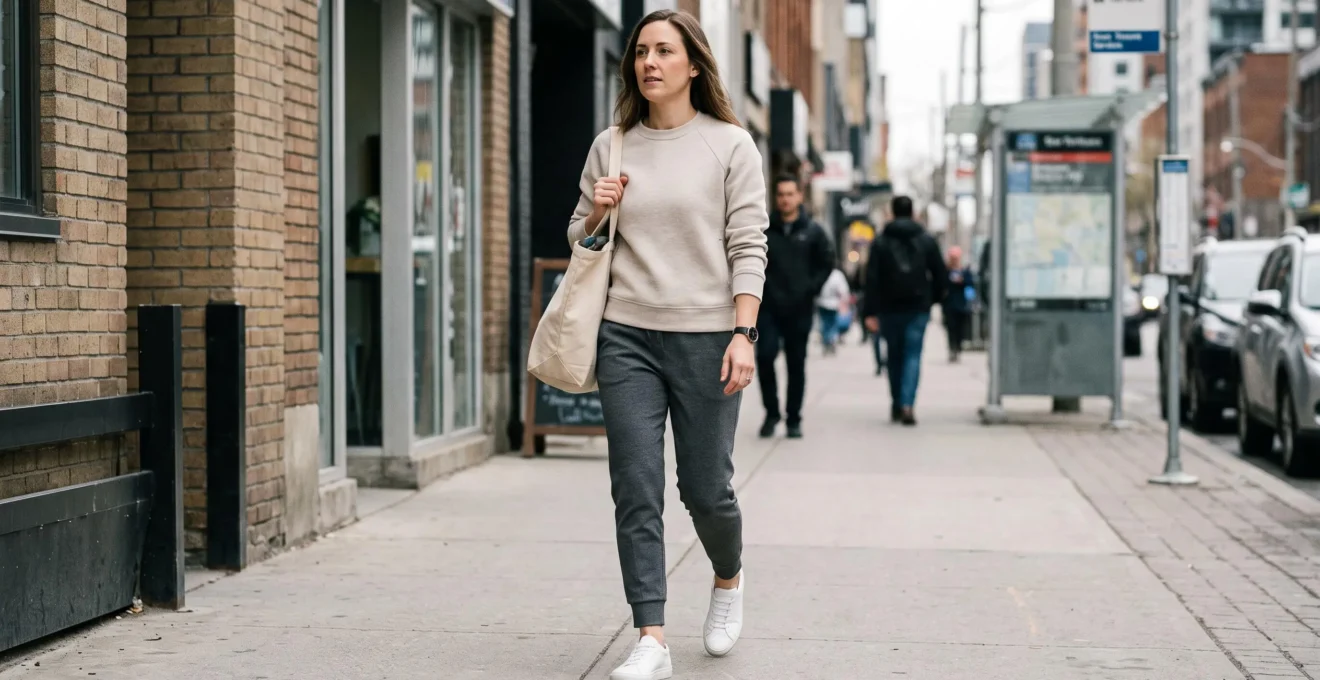
Leggings, joggers and sweatshirts can be comfortable enough for a workout and polished enough for everyday life. The difference is rarely about wearing expensive brands or giving up stretchy fabrics. It comes down to how the pieces fit, how well they have been maintained and whether the outfit contains a few deliberate styling choices.
To wear athleisure outside the gym without looking underdressed, start with comfortable basics and add structure through footwear, outerwear or a bag. Choose fabrics that hold their shape, pay attention to trouser hems and keep worn-out pieces out of your everyday rotation.
A pair of leggings might work perfectly for a coffee run with a crisp overshirt and clean trainers. The same leggings with an oversized, faded hoodie and heavily worn running shoes create a different impression. Neither combination is inherently wrong; the appropriate choice depends on the occasion and the appearance you want.
The goal is a repeatable outfit formula that feels as easy as gymwear but looks considered enough for errands, travel, informal meetings and spontaneous social plans.
Polished athleisure at a glance
- Balance soft athletic basics with at least one structured element, such as a tailored jacket, clean everyday trainers or a defined bag.
- Improve two different aspects of an outfit rather than adding multiple accessories that solve the same problem.
- Check fit, fabric condition and hems regularly; even carefully styled clothes can look untidy when their shape has deteriorated.
- Why Does Athleisure Sometimes Look Polished and Sometimes Look Like Pyjamas in Public?
- How to Make Athleisure Look Intentional Using 2 Upgrades Without Losing Comfort?
- Which Looks More Put-Together for Errands: Leggings, Joggers, or Wide-Leg Athleisure Pants?
- The Worn-Out Athleisure Sign That Makes You Look Unkempt Even in a Great Outfit
- When Should You Retire Athleisure From Streetwear Use to Avoid Looking Scruffy?
- How to Build a Casual-Comfort Uniform With 5 Pieces So You’re Camera-Ready in 60 Seconds?
- How to Combine 2 Textures in One Outfit Without Looking Overstyled or “Busy”?
- How Can You Dress for Casual Comfort Without Looking Sloppy at Work-From-Home and in Public?
Why Does Athleisure Sometimes Look Polished and Sometimes Look Like Pyjamas in Public?
Athleisure looks polished when its relaxed shapes are balanced by structure, clean finishing details and an outfit that suits the occasion. It starts resembling pyjamas when every garment is loose, soft or visibly worn. The distinction is not about comfort itself: comfortable clothing can look intentional when its proportions, fabric and supporting pieces work together.
The first distinction is between clothing designed primarily for athletic performance and clothing inspired by sportswear. True workout clothing may feature ventilation panels, reflective details, compression fabrics and technical construction. Athletic-inspired streetwear borrows the flexibility and casual silhouettes of those garments while adapting them for everyday use.
A thick-knit sweatshirt with a defined neckline, for example, creates a different silhouette from a thin jersey hoodie that collapses around the shoulders. Tailored joggers with a stable waistband and controlled ankle opening can look closer to casual trousers than traditional gym tracksuit bottoms.
Fashion editorials regularly use this contrast. Vogue’s activewear outfit ideas include combinations such as bike shorts with a linen shirt, ballet flats and a raffia tote. These are styling examples, not proof that any particular formula is universally perceived as more elegant.
Try the all-soft test: stand in front of a mirror and identify whether every garment hangs loosely without a defined shape. If the answer is yes, experiment with replacing one piece rather than changing the entire outfit.
Footwear and finishing details also influence the overall impression. Running shoes may make leggings appear ready for exercise, while clean minimalist trainers can steer the same outfit towards casual streetwear. A purposeful bag, tidy hair or simple watch can reinforce the chosen direction.
There is also a practical habit to consider. Wearing the same gym outfit for every activity can make dressing a largely automatic decision. That is not necessarily a problem, but it may leave less room to adapt to occasions with different expectations. A quick check before leaving home restores that choice.
Once the balance between softness and structure is clear, the next step is making that balance achievable with the clothes already in your wardrobe.
How to Make Athleisure Look Intentional Using 2 Upgrades Without Losing Comfort?
To make athleisure look intentional, try upgrading two different elements of a basic outfit: one that adds structure and another that improves its fabric, colour or finish. For example, replace worn running shoes with clean everyday trainers and swap a thin hoodie for a sweatshirt that holds its shape. The two-upgrade method is a practical styling shortcut, not a scientifically established rule.
Start with the outfit you naturally reach for, such as leggings, a T-shirt and a hoodie. Instead of replacing everything, identify the feature that makes the outfit look most like gymwear.
A structural upgrade creates a clearer outline. It might be an overshirt, a softly tailored jacket, a defined tote or footwear that looks designed for everyday use. An elevated upgrade improves the existing clothes through a better-preserved fabric, a more cohesive colour palette or a cleaner finish.
Fabric construction often matters more than branding. A substantial interlock, scuba-style or double-knit sweatshirt may maintain a defined silhouette better than a particularly thin, loosely constructed jersey. That does not make every thick fabric superior: fibre composition, knitting structure and garment design all affect performance and appearance.
For the method to work, the upgrades should perform different jobs. Adding a necklace and a belt might introduce detail, but neither necessarily addresses an entirely shapeless outfit. A defined jacket combined with a cleaner colour scheme offers two more distinct changes.
The following examples are hypothetical wardrobe swaps. Their comfort rankings are qualitative suggestions rather than measured product comparisons.
| Starting outfit and weak link | Two upgrades | Comfort retained |
|---|---|---|
| Leggings, thin hoodie and running shoes; little structure | Structured sweatshirt and clean everyday trainers | High, with flexible layers and familiar footwear |
| Soft joggers and oversized T-shirt; undefined silhouette | Open tailored overshirt and coordinated neutral colours | High, with no need to replace the trousers |
| Matching tracksuit; strongly athletic appearance | Casual jacket and structured everyday bag | High, since the base outfit remains unchanged |
| Leggings and fitted top; looks incomplete outdoors | Longline shirt and simple leather-look tote | High, if the shirt allows comfortable movement |
Stop when the outfit feels appropriate for the destination. Additional jewellery, sharper tailoring or more accessories may suit a particular personal style, but they are not necessary to make comfortable clothes look deliberate.
The most useful upgrades depend partly on your base trousers, because leggings, joggers and wide-leg styles create very different starting silhouettes.
Which Looks More Put-Together for Errands: Leggings, Joggers, or Wide-Leg Athleisure Pants?
Wide-leg athleisure trousers often look more like everyday clothing with minimal styling, while joggers offer a versatile middle ground and leggings retain a stronger workout association. However, none is automatically more polished. Fabric weight, hem length and what you wear on top can change the result considerably, especially when errands include lunch, travel or informal social plans.
Leggings create a close-fitting silhouette and are easy to associate with fitness clothing. To make them feel more suited to everyday outings, add a substantial top layer, such as a structured sweatshirt, longer overshirt or relaxed jacket with defined shoulders.
Joggers provide more styling flexibility. A tapered pair in a stable knit can create a neat line from hip to ankle, while very thin, baggy joggers may suggest loungewear. Check whether the knees have stretched and whether the cuffs sit where intended.
Wide-leg athleisure trousers naturally resemble casual wide-leg trousers, particularly in fabrics with enough body to maintain their shape. Their potential weakness is excessive fluidity: very lightweight, draping fabric combined with an oversized top may resemble pyjama bottoms.
The following decision grid gives practical outfit combinations for three common situations. It reflects styling judgement rather than a tested ranking of trouser types.
| Type of outing | Leggings | Joggers | Wide-leg athleisure trousers |
|---|---|---|---|
| Quick errand | Clean trainers and a sweatshirt with shape | Neat T-shirt and casual trainers | Simple fitted top and comfortable shoes |
| Errands with a social stop | Structured overshirt and everyday bag | Refined knit or tidy jacket | Defined top and minimal accessories |
| Full day out | Versatile jacket and supportive everyday footwear | Substantial fabric, layers and practical bag | Controlled hem, adaptable layers and comfortable footwear |
Hem length deserves a separate mirror check. Tapered joggers should generally finish neatly around the ankle rather than pooling heavily over shoes. Wide-leg trousers may cover more of the shoe, but they should not drag along the pavement. A clean hem makes even a very relaxed silhouette look more controlled.
For fluid wide-leg trousers, a slightly shorter hem or a more substantial fabric can make the outfit appear less like sleepwear. Alternatively, balance the drape with a shorter, more defined top.
Match the choice to movement and practicality too. Leggings can be convenient for long walks, joggers for variable temperatures and wide-leg trousers for days when a more conventional casual silhouette is desirable.
Once the silhouette works, fabric condition becomes the next important variable: a well-cut pair can still appear neglected when its surface shows extensive wear.
The Worn-Out Athleisure Sign That Makes You Look Unkempt Even in a Great Outfit
Visible pilling is one of the clearest signs that an athleisure garment may look worn, even when the rest of the outfit is well styled. Small fibre balls, thinning patches and stretched surfaces interrupt an otherwise neat silhouette. Pilling does not necessarily mean a garment has become unusable, but it is worth checking before relying on it for everyday streetwear.
Pilling develops when friction loosens fibres on a fabric surface and those fibres become entangled. Common contact points include the inner thighs, underarms, sides of sweatshirts and areas where bags repeatedly rub against clothing.
According to REI‘s advice on preventing and fixing fabric pilling, abrasion is a principal cause, and some surface pills can be removed carefully with a fabric shaver. The guidance also recognises that certain fabrics may pill despite appropriate care.
Other signs are sometimes more revealing than pilling itself: a shiny seat on leggings, knees that stay baggy after washing, loose cuffs or colours that have faded unevenly.
Inspect the garment in daylight at arm’s length. This practical check can make it easier to notice surface wear that you overlook during a familiar indoor dressing routine. Turn slightly to inspect the side seams, seat and knees rather than judging only the front.
Fabric construction influences how garments respond to repeated use and laundering. Research on laundering and pilling in knitted fabrics published in the Journal of Academia in 2018 compared selected cotton and polyester weft-knitted structures, including interlock, rib and plain jersey. The reported differences show that fibre composition and construction matter; the findings do not establish a universal winner for fashionable athleisure.
Care habits can also influence longevity. Follow the manufacturer’s instructions, reduce unnecessary abrasion during washing and avoid dryer temperatures that exceed the garment’s recommendations. Washing delicate knits separately from rougher items may reduce friction, although the effects depend on the fabrics and washing conditions.
Fabric softener also requires care: it may interfere with the performance of certain technical garments, but it should not be described as a universal cause of pilling.
The difficult part is often emotional rather than technical. A favourite sweatshirt may feel particularly comfortable precisely because it has softened and stretched with wear. Assigning it to home use can preserve that comfort without forcing it to serve every occasion.
Surface wear does not always require disposal. The more useful question is whether the garment can be restored, reassigned or should leave your regular rotation.
When Should You Retire Athleisure From Streetwear Use to Avoid Looking Scruffy?
Retire athleisure from your everyday streetwear rotation when visible wear can no longer be corrected easily, the garment has lost its intended shape or persistent marks make it unsuitable for the occasions you attend. Retirement does not automatically mean disposal. Some items can be repaired, others can become home or gym clothing, and only genuinely unusable pieces need to leave the wardrobe.
Instead of replacing items after an arbitrary number of months or washes, assess their condition. A frequently worn pair of leggings may need attention earlier than an occasionally worn sweatshirt, but fabric quality, construction and care habits make fixed replacement schedules unreliable.
Use four main warning signs: persistent pilling, stretched elastic or cuffs, permanent stains or discoloration, and distortion that prevents the garment from sitting as intended.
A piece that still fits securely and functions well may be suitable for another setting even if it no longer delivers the appearance you want in public. For technical clothing, however, loss of support or performance should be treated separately from cosmetic wear.
The distinction matters for items such as sports bras. REI’s sports-bra care guidance recommends monitoring support, elasticity, persistent odours and garment condition. It also discusses rotation and the possibility of using some garments for lower-impact activities when they are no longer appropriate for demanding exercise. That advice is specific to sports bras, not a universal replacement schedule for athleisure.
The five-step athleisure wardrobe inspection
- Inspect the surface: check high-friction areas in daylight and record which pieces have noticeable pilling or thinning. Deliverable: a short list of garments needing closer inspection.
- Test the fit: try on each questionable piece and check whether waistbands, cuffs and knees retain their intended shape. Deliverable: a keep-or-review decision for each item.
- Identify repairable damage: note removable pills, loose seams or minor defects that could be corrected. Deliverable: a separate repair pile.
- Assign a suitable use: classify each garment as everyday streetwear, home or suitable gym use, or no longer usable. Deliverable: three clearly separated groups.
- Check wardrobe gaps: identify which essential everyday pieces genuinely need replacing after repair and reassignment. Deliverable: a prioritised replacement list, not an automatic shopping basket.
Replacement costs can feel frustrating, especially for pieces worn several times a week. One useful consideration is cost per wear: an item used frequently may provide more practical value than an occasional purchase. This is a budgeting perspective, not a reason to replace clothing before necessary.
Re-dyeing, depilling or simple repairs may extend the usable life of selected pieces, provided the garment’s material and care requirements permit the intervention.
With the everyday rotation in good condition, the next opportunity is reducing the number of decisions required to get dressed.
How to Build a Casual-Comfort Uniform With 5 Pieces So You’re Camera-Ready in 60 Seconds?
A five-piece casual-comfort uniform can make getting dressed extremely quick when the entire combination has been selected and tested beforehand. The formula uses one bottom, one top, one structured third piece, one pair of shoes and one accessory. The 60-second target is a practical preparation goal, not a guaranteed dressing time; the real advantage is removing last-minute styling decisions.
Begin with a base outfit that feels comfortable for several hours. This might be tapered knit trousers and a substantial crew-neck T-shirt, or leggings and a relaxed but well-shaped sweatshirt.
Add a structured third piece, such as an unlined jacket, overshirt or refined cardigan. Choose footwear suitable for both your usual walking needs and everyday destinations. Finish with one functional accessory, perhaps a bag or watch.
For someone alternating between video calls and errands, a hypothetical five-piece uniform could be:
- Dark tapered joggers with a stable waistband and tidy hem.
- A smooth, neutral crew-neck top that looks presentable on camera.
- An open, structured overshirt that adds definition around the shoulders.
- Clean, comfortable trainers suitable for walking outside.
- A simple everyday tote that holds essentials without disrupting the silhouette.
The outfit must work in two frames. On video calls, the neckline, shoulders, upper layers and visible fabric condition matter most. Outdoors, the complete silhouette, trouser hems and footwear become equally relevant.
Pre-validation is what makes the uniform fast. Try every combination in a full-length mirror, sit down to test comfort, check the upper half on a video preview and ensure that the layers work together without constant adjustment.
Then store the approved pieces together or in clearly organised wardrobe positions. A planned outfit that requires searching through laundry is no longer a reliable shortcut.
Because a uniform relies on repeated use, establish a realistic washing and rotation routine. A second compatible top or bottom can preserve the formula when one component is being cleaned. Duplicates are helpful only when they suit actual wearing frequency and budget.
Maintenance is part of the method: shoes should be clean, fabrics should retain their shape and the outfit should remain appropriate for the weather.
A reliable uniform need not look identical every day. Small variations in texture can create visual interest without adding another complicated styling decision.
How to Combine 2 Textures in One Outfit Without Looking Overstyled or “Busy”?
Combine two textures in athleisure by pairing one smooth or technical fabric with one softer, more tactile material. For example, a sleek scuba-style jacket can work with ribbed cotton trousers, while smooth leggings can balance a textured knit. Keep the colours relatively quiet so the fabric contrast adds interest without making an otherwise simple outfit feel crowded.
Athleisure often relies on neutral palettes and limited pattern. When several garments share a similar colour, surface texture becomes an effective way to create distinction.
Technical fabrics may have a smooth, compact or slightly lustrous finish. Softer materials, including cotton terry, fleece and ribbed knits, introduce visible texture and a different way of catching light.
A useful styling experiment is to make one material dominant and let the other provide contrast. For example, pair smooth black leggings with a substantial heather-grey knit, or combine matte joggers with a smooth technical jacket.
The two-texture rule is a simplification, not a universal fashion limit. Some outfits successfully combine more textures. Restricting the initial combination is simply a way to control visual complexity when the goal is effortless everyday dressing.
Notice where the eye lands first. If a chunky knit, reflective jacket, highly textured bag and patterned shoes all compete for attention, reduce one of the louder elements. If the outfit feels too plain, introduce contrast through a ribbed layer or a softly textured accessory.
Accessories offer an especially flexible way to test the idea. A canvas bag can introduce a natural-looking texture alongside smooth technical clothing. A ribbed cap or suede-look shoe can add a softer finish without requiring another garment purchase.
Consider shine as well as surface pattern. Two materials can both be smooth yet appear different because one is matte and the other reflective. Conversely, a heavily textured fleece and thick ribbed trousers may compete even when they are the same colour.
Adapt the combination to practical concerns. Breathable materials may be preferable during warm weather, while insulating knits can be useful in colder conditions. The visual formula should never override comfort or appropriate clothing performance.
Once these combinations feel natural, they can become part of a daily wardrobe that moves between home working and public activities without a complete outfit change.
Key takeaways for everyday dressing
- Choose a comfortable base that already works for your most demanding daily setting, rather than relying on a last-minute change.
- Keep a structured layer and appropriate outdoor footwear ready so leaving home requires minimal adjustment.
- Build repeatable habits around garment condition and outfit preparation instead of purchasing more clothes to solve every styling problem.
How Can You Dress for Casual Comfort Without Looking Sloppy at Work-From-Home and in Public?
Dress comfortably for both working from home and going out by starting with an outfit that meets your personal public-wear standard, then adjusting only the outer layer or footwear when needed. A neat top, well-fitting comfortable trousers and a structured third piece can cover video calls, errands and informal plans. This approach avoids maintaining two separate wardrobes for the same day.
Working from home creates different visibility requirements. During a video call, viewers usually see the upper part of an outfit. In public, the full silhouette, shoes and condition of the trousers become noticeable.
The common mistake is choosing clothing that works only for the camera frame, then discovering that it feels incomplete when an unexpected errand arises.
Instead, use a tiered approach. Begin with a comfortable base that is suitable for leaving home. For a video call, make sure the neckline and upper layers appear tidy. For errands, add suitable shoes and a practical bag. For informal social plans, check whether the jacket, fabric condition and silhouette match the setting.
A hypothetical hybrid day illustrates the method. At 9 am, dark substantial joggers and a clean crew-neck knit work for a home-office video call. At lunchtime, adding trainers and an overshirt prepares the same outfit for errands. At 4 pm, the unchanged base remains suitable for a school pickup or another routine outing, provided it matches the expectations and weather.
There is no need for an absolute rule about what constitutes acceptable home clothing. Instead, establish a personal minimum standard that reflects your routine: clothes should be clean, comfortable, appropriately covering and in a condition you would be happy to wear outside.
That personal standard is especially useful when working remotely becomes routine. A quick morning check can prevent gradually overlooking worn cuffs, stretched waistbands or clothing that no longer fits the occasions you encounter.
The daily dressing path can be reduced to four decisions:
- Choose the base: select leggings, joggers or wide-leg trousers according to the day’s activities.
- Check the condition: inspect visible wear, fit and hems before committing to the outfit.
- Apply targeted upgrades: add structure and improve one other aspect only when needed.
- Confirm versatility: ensure the chosen pieces can handle both camera framing and public outings.
Keep the five-piece uniform as a fallback for mornings when there is little time to decide. On other days, experimenting with a texture combination or a different layer can provide variety while preserving the same comfortable foundation.
The aim is not to look formally dressed at home or to meet an imagined universal standard of presentation. It is to retain freedom of movement while being prepared for the actual situations in your day.
For the next working day, choose one comfortable base outfit tonight, check its condition and place a suitable structured layer beside it. That small preparation step makes comfortable, presentable dressing easier to repeat without unnecessary shopping or complicated styling.
Can you wear athleisure to a casual office?
It depends on the workplace dress code and the nature of your role. In an office that permits relaxed clothing, substantial knit trousers, a neat top, a structured jacket and clean everyday trainers may be appropriate. Technical gym leggings, visibly worn sweatshirts or very casual footwear may be less suitable in settings with stricter expectations. Check the organisation’s dress guidance rather than assuming all casual offices treat sportswear alike.
Are running shoes too sporty for an everyday athleisure outfit?
Not necessarily. Running shoes can work well in everyday outfits, especially when walking comfort is a priority. Highly technical designs, bold performance details or heavily worn soles may make the outfit feel more exercise-oriented. Clean, understated footwear offers an alternative when a less sporty appearance is preferred.
Does polished athleisure have to be neutral or monochrome?
No. Neutral colours simply make coordinating garments easier. A colourful sweatshirt, patterned trainers or contrasting jacket can look intentional when the other elements provide a coherent foundation. If combining bold colours and textures feels difficult, keep one feature prominent and allow the supporting pieces to remain quieter.
Can inexpensive athleisure look as polished as premium activewear?
Yes, depending on the individual garments. Price and brand recognition do not guarantee good fit, attractive drape or durability. Inspect fabric opacity, seams, waistband stability, silhouette and how the material behaves after washing. Well-maintained, affordable clothing can create an intentional outfit, while expensive garments can still look untidy if they are poorly fitted or worn out.
How can you pack athleisure for travel without looking like you’re wearing gym clothes?
Build around interchangeable comfortable trousers, a clean base top, a versatile outer layer and supportive walking shoes. Choose combinations that allow you to move comfortably during the journey while remaining suitable for arrival, casual meals and sightseeing. Coordinated colours and a practical everyday bag can help make a small travel wardrobe feel cohesive.