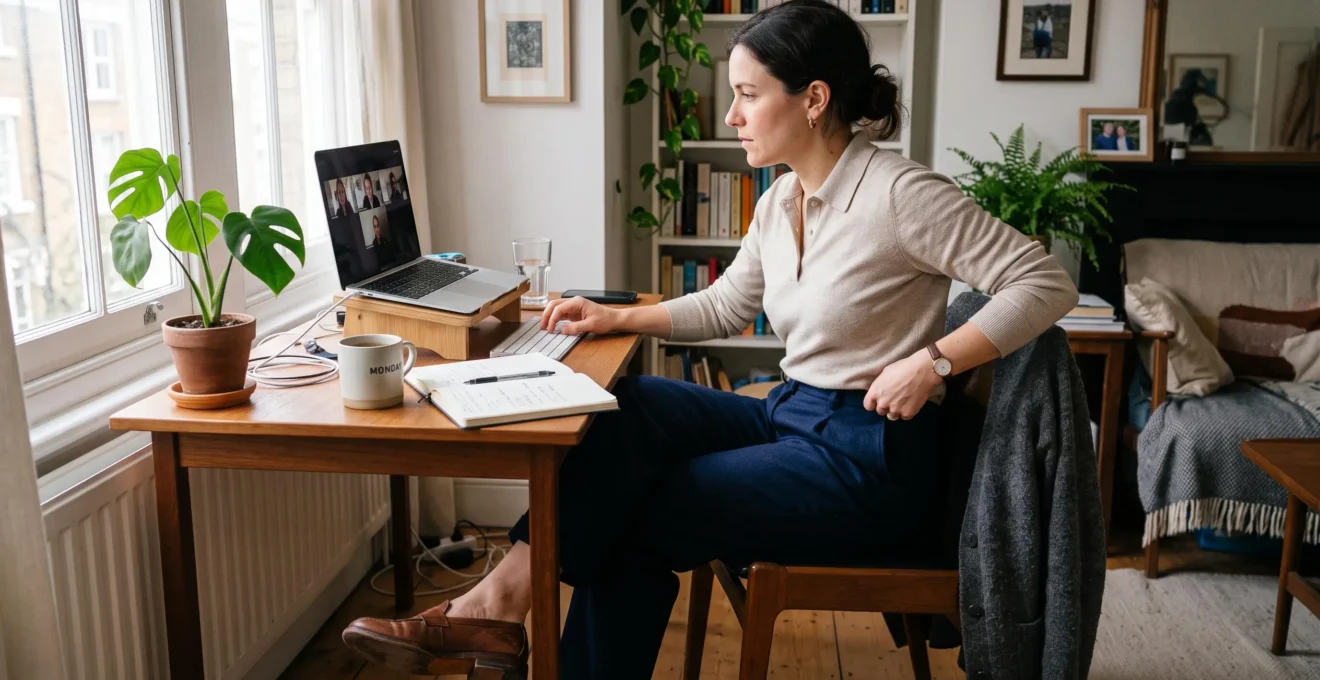
Dressing comfortably without looking sloppy starts with one practical decision: keep the freedom of movement, but give your outfit at least one visibly defined element. A clear neckline, well-shaped trousers, structured outer layer or substantial shoe can make soft clothing feel intentional rather than accidental.
For hybrid workers, the challenge is rarely getting dressed for a formal occasion. It is finding clothes that remain comfortable through hours at a desk, look presentable on an unexpected video call and still work when leaving home for groceries, coffee or a casual meeting.
The solution does not require replacing every sweatshirt or investing in a separate work-from-home wardrobe. It involves understanding how clothing changes during wear, building repeatable combinations and knowing which adjustments produce the biggest visual difference.
A useful starting point is to separate comfort from looseness. Clothing can feel flexible and relaxed without losing its shape. Once that distinction is clear, everyday dressing becomes less about following trends and more about choosing combinations that work reliably across different parts of the day.
Comfortable but polished: the essentials
- Combine soft fabrics with at least one defined silhouette, structured layer or substantial accessory.
- Build a five-piece outfit system around a top, bottom, third layer, shoes and accessory that work together.
- Before a video call or errand, check the neckline, waist and footwear rather than changing your entire outfit.
- Why Do Comfortable Clothes Start Looking Unpolished After 2 Hours of Wear at Home?
- How to Build a Casual-Comfort Uniform With 5 Pieces So You’re Camera-Ready in 60 Seconds?
- Which Looks More Polished for Errands: a Knit Set or Relaxed Tailoring With Trainers?
- The Head-to-Toe Softness Mistake That Makes Casual Comfort Look Like Loungewear
- A 3-Touchpoint Upgrade That Makes Comfortable Outfits Look Sharper Without New Clothes
- How to Make Athleisure Look Intentional Using 2 Upgrades Without Losing Comfort?
- How to Combine 2 Textures in One Outfit Without Looking Overstyled or ‘Busy’?
- How Can You Wear Athleisure Outside the Gym Without Looking Like You Forgot to Change?
Why Do Comfortable Clothes Start Looking Unpolished After 2 Hours of Wear at Home?
Comfortable clothes can start looking unpolished after a couple of hours because sitting, bending and repeated movement expose weaknesses in fabric recovery, fit and construction. Knit elbows may stretch, trousers can crease across the lap and soft collars may collapse. Two hours is not a universal threshold: the changes depend on the garment and how it is worn.
Consider a soft cotton T-shirt with relaxed jersey trousers. Both pieces may look neat immediately after dressing. After working at a desk, however, the shirt can develop folds around the waist, the knees may become more prominent and the neckline may sit differently.
This does not necessarily mean the clothing is poor quality. Some changes follow naturally from the characteristics of the material and its construction.
The University of Georgia Cooperative Extension‘s textile fiber reference explains that cotton tends to wrinkle unless treated, polyester generally resists wrinkling but can pill, and rayon may wrinkle or stretch. These characteristics are useful when evaluating garments, although they do not predict exactly how an individual outfit will behave during a workday.
Comfort fabric and comfort cut are different things. A comfort fabric feels pleasant against the skin or moves easily. A comfort cut provides room through the body, shoulders or legs. Combining a very soft fabric with an excessively slouchy cut can produce an outfit with little visible definition.
A better balance might be a soft knitted polo with a stable collar, or trousers with a comfortable waistband but a clean, relatively straight leg. Neither requires a tight fit.
Video calls introduce another complication. Laptop cameras show a restricted view, and lighting can change how folds, seams and surface texture appear. Rather than assuming that something looks good because it works in a full-length mirror, check it in the actual camera preview.
Try a simple diagnostic:
- Photograph your outfit immediately after getting dressed.
- Wear it normally while working and sitting for a few hours.
- Take a second photograph from approximately the same position and lighting.
- Compare the collar, sleeves, waistband, trouser knees and hems.
- Identify the first area that needs adjustment.
If your trousers stay neat but your collar collapses, focus on tops with better neckline stability. If the trousers develop persistent knee bagging, reconsider the fabric or construction before changing the entire outfit formula.
Once you know which part of your outfit changes most during wear, you can design a small wardrobe system around pieces that retain a presentable appearance with less intervention.
How to Build a Casual-Comfort Uniform With 5 Pieces So You’re Camera-Ready in 60 Seconds?
A five-piece casual-comfort uniform combines a structured-soft top, polished-soft trousers, a finished third layer, practical shoes and one accessory. Choose compatible colors and repeatable silhouettes so every piece works together. With the outfit already prepared, a 60-second refresh can be realistic, although getting dressed completely may take longer.
Think of the uniform as a decision-making system, not a requirement to purchase five new items. The goal is to eliminate the daily question of whether individual pieces belong together.
A practical combination might include:
- Top: a soft cotton-blend polo, fine-knit crewneck or T-shirt with a neckline that holds its shape.
- Bottom: relaxed straight-leg trousers with a comfortable waistband and a clean hem.
- Third layer: a refined cardigan, unstructured blazer or overshirt.
- Shoes: clean low-profile trainers, loafers or another supportive shoe with a defined sole.
- Accessory: a simple watch, understated necklace, structured bag or similarly deliberate finishing detail.
For an easy starting formula, keep at least one element relatively stable or non-stretch, such as a woven overshirt or structured bag. This provides contrast when the other pieces are softer.
For video calls, the upper part of the outfit deserves priority. A laptop usually frames the face, shoulders and upper torso, so collar shape, neckline, shoulder fit and visible layers matter more on camera than the trouser hem.
That does not make the trousers irrelevant. Keeping them presentable allows you to stand up, answer the door or leave the house without starting over.
Use one neutral base, one accent color and two contrasting textures. For example, navy trousers, an oatmeal knit top and an olive overshirt create a coordinated palette without relying on matching sets. Smooth woven trousers and a visibly knitted top provide enough material contrast to keep the combination interesting.
To avoid feeling trapped in the same outfit every day, rotate two or three versions of each category. You might own several similarly fitted tops in different colors or alternate between straight trousers and relaxed chinos.
The silhouette remains familiar, but the combinations change.
Build your five-piece uniform from clothes you already own
- Select one comfortable top with a neckline that stays defined. Set it aside as your base piece.
- Choose trousers that remain comfortable when seated and have a clean hem. Confirm the fit by sitting and standing.
- Add one third layer that works with both pieces. Check that it hangs smoothly over the shoulders.
- Pair the outfit with a clean, supportive shoe and one accessory. Photograph the complete combination.
- Test the outfit in your laptop camera and save a reference photo of the version that looks best.
The useful deliverable is not a shopping list. It is a photographed outfit you can repeat without deliberation, along with a small number of interchangeable alternatives.
For days that involve leaving home, the same uniform can serve as a base. The remaining question is whether its level of structure matches the setting.
Which Looks More Polished for Errands: a Knit Set or Relaxed Tailoring With Trainers?
A fine-gauge knit set can look polished for low-key errands when it fits neatly and maintains its shape. Relaxed tailoring with trainers is generally more adaptable when the day includes several public settings. Neither option wins automatically: compare visual structure, how appropriate it looks for the destination and how often it needs readjustment.
A matching knit top and trousers can appear coordinated with almost no styling effort. The shared material and color communicate that the pieces were selected together.
However, this advantage depends on the knit retaining its shape. An oversized set with stretched knees, loose cuffs or obvious pilling can quickly read as home clothing.
Relaxed tailoring works differently. Straight-leg trousers and an easy-fitting woven shirt establish clearer lines, while trainers reduce the formality of the combination.
Use the following comparison when choosing between them.
| Decision criterion | Fine-gauge knit set | Relaxed tailoring with trainers |
|---|---|---|
| Visual structure | Relies on an even fit and fabric that retains its shape. | Uses seams, hems and woven fabrics to maintain a defined silhouette. |
| Public-context signal | Looks deliberate when coordinated and neatly fitted; can resemble loungewear if overly loose. | Usually reads as more versatile across errands, cafés and casual meetings. |
| Adjustment after sitting | May require smoothing or repositioning if the knit stretches or bunches. | May crease, but a stable cut can preserve its overall line. |
| Fit-sensitive detail | Knee shape, cuffs, pilling and overall drape. | Trouser length, waistband placement and break over the shoe. |
| Best practical use | Short errands or comfortable, coordinated casual outings. | Mixed-purpose outings with changing social expectations. |
Footwear also changes the balance. A knit set paired with substantial running shoes can appear more sports-oriented, particularly if the knit itself is loose. A cleaner leather shoe or minimal trainer creates a stronger contrast.
With relaxed trousers, understated trainers can be effective because the difference between the tailored silhouette and the sporty shoe appears intentional.
The key is to check trouser length. Fabric dragging across the ground looks neglected, while an awkwardly short hem can interrupt the silhouette. Aim for a length that looks deliberate with the shoes you actually wear.
Research supports being attentive to how clothing is interpreted without providing a universal ranking of these outfits. A study recorded by the University of Hertfordshire’s research archive on clothing and competency judgments examined how attire and posture interact in observers’ evaluations of characteristics such as professionalism and confidence. It did not specifically compare knit sets with relaxed tailoring.
For a quick grocery trip, either can work. For an afternoon that may include shopping, coffee and an unplanned professional encounter, relaxed tailoring offers a useful starting point without demanding formal clothes.
The Head-to-Toe Softness Mistake That Makes Casual Comfort Look Like Loungewear
The head-to-toe softness mistake happens when every visible part of an outfit lacks definition: an oversized jersey top, loose knit trousers, collapsible shoes and an unstructured bag. None is necessarily unsuitable alone. Together, however, they can resemble loungewear because the outfit contains few visual boundaries that distinguish intentional dressing from staying at home.
The easiest correction is the one-rigid-element rule: introduce one clearly structured item while leaving the rest comfortable.
This could be a coat with a defined shoulder, a woven overshirt, a structured crossbody bag or shoes with a firm sole and stable heel counter.
Structure does not have to mean stiffness. A lightweight jacket can maintain a recognizable shoulder line without restricting movement. A soft leather shoe can provide shape while remaining comfortable for walking.
The distinction comes from how materials behave visually. Soft fabrics tend to follow the contours and movements of the body, while more stable materials and constructions can create visible edges, seams and straight lines.
These characteristics interact with fit. A poorly fitted tailored coat can look less composed than a well-fitted knitted cardigan, so rigidity alone is not a guarantee of polish.
To evaluate an outfit, stand in front of a mirror and ask: can I identify at least one clean edge or stable shape from head to toe?
If the answer is no, test a single change. Put on a structured jacket or exchange house slippers for a firmer shoe. Then compare the result before making additional adjustments.
The aim is not to make every item more tailored. In fact, adding a structured jacket, stiff trousers, heavy shoes and a rigid bag simultaneously may undermine the freedom of movement that made the original outfit appealing.
As a practical styling heuristic, you can keep most of the outfit soft and let one contrasting item carry the structure. The idea of retaining roughly 80% comfort is a useful illustration, not a scientifically established clothing ratio.
Choose the element with the greatest visual impact and lowest physical cost. A defined outer layer may work better than a restrictive waistband; a structured bag may be enough when you do not want to change your clothing at all.
Once a single structured element is in place, smaller adjustments around the neckline, waist and footwear can improve the result without adding more layers or sacrificing comfort.
A 3-Touchpoint Upgrade That Makes Comfortable Outfits Look Sharper Without New Clothes
Three quick adjustments can make a comfortable outfit look more deliberate without requiring new clothing: define the neckline, tidy the waist and choose appropriate footwear. These areas influence the overall silhouette and provide practical places to focus your attention. The method is a styling shortcut, not a measured guarantee about how every observer judges clothing.
Start with the neckline or collar. A stretched, collapsing neckline can make an otherwise neat top appear worn. Straighten the collar, smooth the shoulder seams or place an open overshirt over a soft T-shirt to create a clearer frame around the upper body.
If the shirt already has a stable neckline, leave it alone. A meaningful adjustment should correct something visible rather than add complexity for its own sake.
The second touchpoint is the waist. A long, loose top hanging over equally loose trousers can hide the body’s natural proportions and make the outfit appear shapeless.
A partial front tuck can introduce a visible waistband without turning the outfit into something fitted. Alternatively, use an existing belt, reposition a cardigan or choose to leave a shorter top untucked.
Waist definition does not require a tight waistband. The objective is to clarify where one garment ends and another begins.
The third touchpoint is footwear. Indoor slippers, heavily worn trainers or collapsible slip-ons can make otherwise considered clothing appear more home-oriented.
Try an existing pair of shoes with a stable sole, a defined heel and a relatively clean surface. You do not need polished leather dress shoes; comfortable, understated trainers can serve the same visual purpose.
For an illustrative one-minute refresh, spend a few moments smoothing the neckline, adjusting the waist and changing into suitable shoes.
Then verify the result at two distances. First, check the outfit close to the mirror for twisted seams, visible creases or bunching. Next, step across the room and assess the entire silhouette rather than isolated details.
If it looks coordinated at a natural viewing distance, additional adjustments may be unnecessary.
Clothing-related impressions are more complex than any three-point formula. A PubMed record for the review on dress and person perception summarizes research showing that clothing and accessories contribute to first impressions, while emphasizing that their interpretation depends on social and cultural context. It does not validate a specific neckline-waist-footwear method.
These small changes are especially useful for athleisure, where the difference between clothing selected for exercise and clothing styled for everyday life often comes from the surrounding pieces.
How to Make Athleisure Look Intentional Using 2 Upgrades Without Losing Comfort?
Make athleisure look intentional by replacing one overtly sporty outer layer and refining the accessories or footwear. Keep the technical base if it feels comfortable and suits the activity. A clean jacket, understated bag or minimal shoe can change how leggings, joggers and athletic tops read without introducing restrictive clothing.
Imagine wearing dark joggers, a technical T-shirt, a branded gym hoodie and running shoes. The combination is practical, but every visible element points toward exercise.
There is nothing inherently wrong with that appearance. The question is whether it matches your destination.
For a café visit or casual meeting, the easiest way to make the combination feel selected rather than incidental is to adjust the pieces that are not essential to physical comfort.
Upgrade one: replace the sport-specific outer layer. Exchange the gym hoodie or athletic zip-up for a simple overshirt, relaxed cardigan or minimal jacket. The joggers and comfortable base layer can remain unchanged.
A jacket with a clean front, limited visible branding and a defined silhouette provides a different context for the technical clothing beneath it.
Choose a weight and fabric that suit the weather. A heavy coat is not automatically a better upgrade if it makes the outfit uncomfortable indoors.
Upgrade two: refine the accessory and shoe combination. A large performance backpack, prominent sport socks and specialized running shoes reinforce the impression that you are headed to training.
For a non-sport outing, consider a simple crossbody bag, understated socks and low-profile footwear in a solid color. These are examples, not mandatory replacements. A clean backpack or running shoe may still be entirely appropriate when you need its functionality.
Try limiting visible sport branding or technical details rather than eliminating every athletic feature.
The comfort test is equally important. If switching shoes creates pressure or reduces support, keep the more comfortable pair and adjust the bag or outer layer instead. If a jacket restricts shoulder movement, choose a softer alternative with a cleaner silhouette.
A visual upgrade that makes you physically uncomfortable defeats the purpose of casual-comfort dressing.
When choosing those substitutions, texture can be just as useful as garment category. A smooth woven layer over a soft athletic base often creates a clearer contrast than adding another similarly soft piece.
How to Combine 2 Textures in One Outfit Without Looking Overstyled or ‘Busy’?
Combine two textures by choosing materials that look clearly different while keeping the colors relatively restrained. Make one texture dominant and use the other as an accent. For example, smooth cotton trousers with a textured knit top create visible contrast without needing bold patterns or additional accessories.
Texture is the visible or tactile surface quality of a material. A ribbed knit, brushed fleece, crisp cotton shirt and smooth denim each create a different impression, even when their colors are similar.
To build an outfit around texture, begin with the material you want to wear for comfort. Then introduce one contrasting surface.
A soft knitted sweater can work with smooth cotton chinos. A brushed sweatshirt can pair with crisp denim. Relaxed woven trousers can balance a visibly ribbed top.
The useful test is contrast at a glance. If both fabrics have nearly identical surface qualities, their differences may be too subtle to contribute much visual definition. That does not make the pairing incorrect, but it may not deliver the contrast you wanted.
Give the outfit a hierarchy. As a practical guideline, let approximately two-thirds of the visible clothing area feature the quieter or dominant texture, with the remaining area providing contrast. This is a styling proportion, not an evidence-based requirement.
For example, smooth navy trousers and a smooth navy overshirt could create the dominant surface, while an oatmeal ribbed knit underneath supplies the secondary texture.
Alternatively, an oversized textured cardigan might become the dominant feature, with plain trousers and a smooth top providing visual restraint.
Color helps control the result. If two textures already contrast strongly, avoid adding multiple competing prints or bright colors unless that is the style you deliberately prefer.
Monochrome combinations are especially easy to repeat: charcoal knit with charcoal woven trousers, cream cotton with oatmeal knit, or navy denim with a navy fine-gauge sweater.
This approach also connects comfort with structure. The soft fabric delivers ease, while the smoother or more stable material contributes clearer visual boundaries. However, texture and structure are not identical: a fabric can be textured and rigid, or smooth and very soft.
Check both properties when evaluating the combination.
Once your base outfit has a clear silhouette and controlled texture, adapting it for public settings becomes a matter of matching the visible athletic details to the occasion.
What to remember before leaving home
- Judge athletic clothing by the destination, not by a blanket rule that joggers or leggings are always too casual.
- Keep the comfortable pieces that work and change the most visibly sport-specific detail when necessary.
- Use the same coordinated home uniform as your starting point, so moving from remote work to an errand requires minimal adjustment.
How Can You Wear Athleisure Outside the Gym Without Looking Like You Forgot to Change?
Wear athleisure outside the gym by matching its technical details to the setting. Simple joggers, leggings and athletic tops can work for everyday errands, particularly when paired with clean shoes and a non-sport layer. For more socially or professionally demanding situations, reduce conspicuous performance features and choose pieces with a more defined silhouette.
The impression that someone forgot to change after exercising often comes from a combination of signals rather than from one garment.
Large performance logos, reflective strips, mesh panels, prominent sport socks and specialized training shoes can collectively suggest that an outfit was assembled for physical activity.
Those details are functional in their intended context. They simply may not communicate the same thing at a café, casual gathering or workplace.
A practical way to decide what to keep is to sort your destination into three broad context levels. These are flexible styling categories, not universal dress-code rules.
| Public context | Pieces that can work | Useful adjustment |
|---|---|---|
| Level 1: Quick errand | Joggers, leggings, sweatshirt and comfortable trainers. | Make sure garments are clean and shoes are suitable for walking. |
| Level 2: Casual social outing | Simple joggers or leggings, plain athletic base layers and understated footwear. | Add a cleaner outer layer or everyday bag; reduce unnecessary sport-specific details. |
| Level 3: Semi-professional setting | Understated technical tops or comfortable athletic-inspired pieces where the dress code permits. | Consider relaxed woven trousers, a structured top or more polished footwear. |
The level should be guided by the actual activity and any dress expectations. A creative office, informal coworking space and client-facing workplace may have very different standards.
Before leaving, apply two questions. First, the purpose test: does this combination look appropriate for where I am going? Second, the detail test: are any visible exercise-specific features distracting from the appearance I want?
If the answers are satisfactory, there is no reason to keep changing.
The most useful scenario for a hybrid worker is the transition from a home-office day to an unplanned errand. Suppose you are already wearing relaxed trousers, a soft top and a lightweight cardigan. The outfit functions comfortably at your desk and looks suitable on camera.
When a grocery trip or coffee invitation appears, changing the entire outfit would be unnecessary. Reposition the top if needed, straighten the cardigan and replace house slippers with clean outdoor shoes.
This is why preparing a coordinated home wardrobe has more value than treating homewear and public clothing as completely separate categories. When the base outfit is already coherent, the transition can involve one meaningful substitution rather than a full change.
There is also no need to hide every sign of athletic influence. Minimal trainers, technical fabrics and comfortable jogger-inspired cuts are established parts of casual dressing. The objective is to make them feel consistent with the occasion rather than disguise their original purpose.
Choose one outfit you already wear regularly, test it while working at your desk, then check whether a footwear or outer-layer swap makes it suitable for your next everyday outing. Save the combination that works and repeat it whenever convenience matters more than deciding what to wear.
Can comfortable clothes look professional on a video call?
Yes, depending on the workplace’s expectations. A soft knit top with a defined neckline, stable shoulder fit and neat outer layer can look appropriate on camera without requiring formal tailoring. Check the actual video preview because camera angle, framing and lighting affect how the outfit appears.
What fabrics are worth considering for a low-maintenance casual wardrobe?
Look for fabrics that balance comfort, shape retention and care requirements. Cotton can feel comfortable but may wrinkle; polyester often resists wrinkling but can pill; and rayon may wrinkle or stretch depending on treatment. Fabric construction, blends and garment fit also matter, so evaluate individual pieces rather than choosing solely by fiber name.
Do comfortable outfits always need a belt or structured jacket?
No. A defined collar, clean trouser hem, stable shoe or neatly fitted knit can provide sufficient visual structure. A belt or jacket is only useful when it solves a specific issue with the silhouette. Avoid adding restrictive pieces merely to make an outfit appear more formal.
How can you keep a small casual wardrobe from feeling repetitive?
Repeat successful silhouettes while changing colors, fabric textures or outer layers. For example, the same relaxed trousers might work with a fine-knit polo, a structured T-shirt and a lightweight overshirt. Keeping a consistent neutral base makes these variations easier to coordinate without introducing unnecessary purchases.
What should you do if a comfortable outfit still looks sloppy after styling adjustments?
Check fit and condition before adding accessories. Persistent pilling, stretched necklines, worn hems or trousers that lose their shape may require garment care, alteration or eventual replacement. If the clothing remains in good condition, try changing only one proportion or layer and reassess the complete outfit from a normal viewing distance.